Buy strom.uk ?
We are moving the project
strom.uk .
Are you interested in purchasing the domain
strom.uk ?
domain@kv-gmbh.de · 0541-91531010
Buy strom.uk ?
How are lattice energy, ion charge, ion radius, and melting temperature related?
Lattice energy is the energy required to separate an ionic solid into its constituent ions. It is directly related to the ion charges and inversely related to the ion radius. Higher ion charges and smaller ion radii result in higher lattice energies. As lattice energy increases, so does the melting temperature of the ionic solid. This is because the stronger the ionic bonds (as indicated by higher lattice energy), the more energy is required to break those bonds, resulting in a higher melting temperature. **
Does renewable energy generate energy or electricity?
Renewable energy generates electricity. Renewable energy sources such as solar, wind, hydro, and geothermal power are used to generate electricity through various technologies. For example, solar panels convert sunlight into electricity, wind turbines harness the power of the wind to generate electricity, and hydroelectric power plants use the energy of flowing water to produce electricity. Therefore, renewable energy is a key source of electricity generation that can help reduce reliance on fossil fuels and mitigate climate change. **

Similar search terms for Ion
Top-Angebote
Products related to Ion:
-
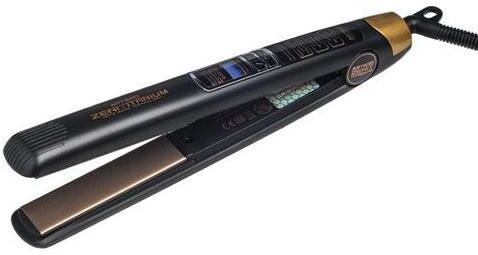
Artero Zenit Ion Nano Titanium ClassicHealth and Beauty Electric appliances Artero Zenit Ion Nano Titanium Classic Iron that reaches 230 C Titanium plates with advanced technology: Faster straightening, smoother plates, and better results. Especially for keratin treatments. High-tech titanium floating plates that generate negative ions, providing more shine and smoothness to the hair. It seals split ends and moisturizes hair. ADAPTABLE REQUIRES EUROPEAN PLUG + voltage (220).78,00 £*Shipping: 4,99 £Secure redirect to the provider
-
Bosch KEO 18V Cordless Reciprocating Saw – Power for All, 1×2Ah Li-ion Battery, NewProduct Description Bosch KEO 18V Cordless Reciprocating Saw – 18V Li-ion with 2.0Ah battery. Versatile, lightweight, and powerful for cutting wood, metal, and plastic with ease. Overview The Bosch Power for All KEO 18V Cordless Reciprocating Saw delivers portable cutting power for a variety of materials. Equipped with an 18V Li-ion battery and ergonomic design, it’s ideal for garden maintenance, DIY projects, and home repairs. Key Features & Benefits 18V Li-ion Battery (2.0Ah) – Long-lasting cordless power Versatile Cutting – Handles wood, metal, and plastic with ease Compact & Lightweight – Easy to control, even in tight spaces Tool-Free Blade Change – Quick and convenient swaps Ergonomic Grip – Comfortable handling for extended use Bosch Power for All System – Compatible with other Bosch 18V tools Cordless Freedom – No cables, no restrictions Product Description The Bosch KEO 18V Cordless Reciprocating Saw offers powerful and flexible cutting performance for home, garden, and workshop use. Powered by an 18V Li-ion battery (2.0Ah), it provides the freedom to cut anywhere without the hassle of cords. This versatile saw easily tackles wood, metal, and plastic, making it perfect for pruning branches, dismantling old furniture, or cutting pipes. Its lightweight, ergonomic design ensures comfortable handling, while the tool-free blade change system allows quick swaps to suit different tasks. As part of the Bosch Power for All range, the battery is compatible with a wide selection of Bosch 18V DIY and garden tools, offering convenience and cost savings.79,99 £*Shipping: 0,00 £Secure redirect to the provider
-
Xtar MC4S Charger for Li-ion BatteriesHighly efficient, the new Xtar MC4S charges up to four Ni-MH, Ni-CD or Li-ion batteries at once. It represents excellent value and is a respected leader in its category. This pack includes a USB-C to USB-C power cable; however, a USB wall adapter is not included in this set, but the option to add one on is available in the bundles section above. We recommend if you are going to use your own adaptor, to check that it is 15W as this is required for optimal performance. Convenient to use worldwide, this charger is compatible with wall adapters, smartphone and solar chargers as well as power banks and computers. To ensure your batteries receive high-quality charging, Xtar have included a self-selected 0V trickle charge phase especially for totally discharged cells, to maximise battery life. It will also automatically switch between constant current fast charge, to constant voltage phase when the batteries are near the end of their charging cycle, for full battery potential. Additional features include: Recharges 3.6V and 3.7V Li-ion, IMR, INR and ICR specialist cells, including size codes 10440, 14500, 14650, 16340, 17500, 17670, 18350, 18490, 18500, 18650, 18700, 20700, 21700, 22650, 25500 and 26650. Accepts two 26650 batteries (CH1 and CH4) and two unprotected type 21700 batteries (in CH2 and CH3) simultaneously. Not for use with protected type 20700 and 21700 cells. Charging current of 1 Amp (through two ports) or 0.5A (through four ports). The higher the Amp, the quicker the battery will charge, with a maximum potential: 4.2 Volts. Operating temperature range: 0°C (minimum) to 40° Celsius (maximum). Flame-retardant casing. Xtar have also ensured this charger has protection against reversed polarity, overcharge, short circuit, excess current and over-temperature to ensure safe charging. Charging current and maximum supported battery capacity Information 3.6V/3.7V Li-ion charging current: 0.5A or 1A × 2 (applies when charging 2 batteries) Max capacity: No limit — charger detects full charge via battery voltage; display caps at 9,999mAh but full charging is unaffected. so ensured this charger has protection against reversed polarity, overcharge, short circuit, excess current and over-temperature to ensure safe charging. Dimensions: 100mm (length) x 97mm (width) x 26.5 millimetres (height). Net weight: 95 grammes. OPTIONAL BUNDLE: None, Inc. Wall Adapter13,95 £*Shipping: 2,49 £Secure redirect to the provider
-
Earth & Clay Ion Stoneware Dinnerware SetNeutral of-the-earth tones contrast the rustic beauty of the Ion Stoneware Dinnerware Set. A semi-matte reactive glaze with a signature speckled effect gives each dish a distinct look, so no two pieces are exactly alike.117,99 $*Shipping: 0,00 $Secure redirect to the provider



-
What are the relationships between lattice energy, ion charge, ion radius, and melting temperature?
Lattice energy is the energy required to separate one mole of an ionic compound into its gaseous ions. It is directly related to the charges of the ions - the higher the charges, the higher the lattice energy. Additionally, the smaller the ions (smaller radius), the higher the lattice energy due to stronger electrostatic forces. This results in higher melting temperatures for compounds with higher lattice energies, as more energy is required to break the strong ionic bonds holding the ions together. **
-
What is an acid residue ion, an oxonium ion, and a hydronium ion?
An acid residue ion is a fragment of a molecule that remains after a hydrogen ion is removed from an acid. An oxonium ion is a positively charged ion formed by the addition of a proton to an oxygen atom. A hydronium ion is a positively charged ion formed by the combination of a water molecule with an extra proton, commonly found in aqueous solutions of acids. **
-
Is electricity from renewable energy sources cheaper?
Electricity from renewable energy sources has become increasingly competitive in terms of cost, and in many cases, it is now cheaper than electricity from traditional sources such as coal or natural gas. The cost of renewable energy technologies like solar and wind power has been steadily decreasing, making them more affordable and cost-competitive. Additionally, the long-term costs of renewable energy are often lower due to the lack of fuel costs and the potential for lower maintenance expenses. As a result, many regions are now seeing renewable energy as a cost-effective option for electricity generation. **
-
What are the oxonium ion and the hydroxide ion?
The oxonium ion is a positively charged ion formed when a water molecule gains a hydrogen ion, resulting in the formula H3O+. This ion is commonly found in acidic solutions. On the other hand, the hydroxide ion is a negatively charged ion formed when a water molecule loses a hydrogen ion, resulting in the formula OH-. This ion is commonly found in basic solutions. Both ions play important roles in acid-base chemistry. **


What is an oxonium ion and a hydroxide ion?
An oxonium ion is a positively charged ion formed by the combination of a water molecule and a hydrogen ion (H+). It is also known as a hydronium ion and is commonly found in acidic solutions. A hydroxide ion, on the other hand, is a negatively charged ion composed of one oxygen and one hydrogen atom (OH-). It is a key component of basic solutions and is responsible for the alkaline properties of substances such as sodium hydroxide. Both oxonium and hydroxide ions play important roles in the pH and chemical properties of solutions. **
What percentage do renewable energy sources make up in electricity generation in Germany in 2020?
In 2020, renewable energy sources made up 46.3% of electricity generation in Germany. This is a significant increase from previous years and reflects the country's commitment to transitioning towards a more sustainable energy system. Renewable energy sources such as wind, solar, and biomass have played a key role in reducing Germany's reliance on fossil fuels and lowering carbon emissions in the electricity sector. **
Top-Angebote
Products related to Ion:
-
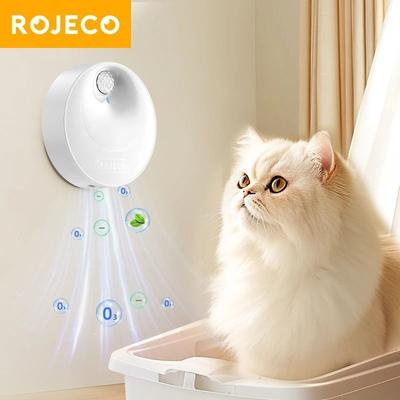
Uplifted Finds ROJECO Ion Pure Smart Litter Deodoriser ROJECO Ion Pure Smart Litter DeodoriserEliminate litter box odors at the molecular level with the ROJECO IonPure Smart Deodoriser. Unlike scented sprays or gels that merely mask smells with artificial fragrances, this advanced device uses Active Oxygen and Negative Ion technology to...138,97 $*Shipping: 0,00 $Secure redirect to the provider
-
Earth & Clay Ion Stoneware Dinnerware SetNeutral of-the-earth tones contrast the rustic beauty of the Ion Stoneware Dinnerware Set. A semi-matte reactive glaze with a signature speckled effect gives each dish a distinct look, so no two pieces are exactly alike.68,49 $*Shipping: 0,00 $Secure redirect to the provider
-
Artero Zenit Ion Nano Titanium ClassicHealth and Beauty Electric appliances Artero Zenit Ion Nano Titanium Classic Iron that reaches 230 C Titanium plates with advanced technology: Faster straightening, smoother plates, and better results. Especially for keratin treatments. High-tech titanium floating plates that generate negative ions, providing more shine and smoothness to the hair. It seals split ends and moisturizes hair. ADAPTABLE REQUIRES EUROPEAN PLUG + voltage (220).78,00 £*Shipping: 4,99 £Secure redirect to the provider
-
Bosch KEO 18V Cordless Reciprocating Saw – Power for All, 1×2Ah Li-ion Battery, NewProduct Description Bosch KEO 18V Cordless Reciprocating Saw – 18V Li-ion with 2.0Ah battery. Versatile, lightweight, and powerful for cutting wood, metal, and plastic with ease. Overview The Bosch Power for All KEO 18V Cordless Reciprocating Saw delivers portable cutting power for a variety of materials. Equipped with an 18V Li-ion battery and ergonomic design, it’s ideal for garden maintenance, DIY projects, and home repairs. Key Features & Benefits 18V Li-ion Battery (2.0Ah) – Long-lasting cordless power Versatile Cutting – Handles wood, metal, and plastic with ease Compact & Lightweight – Easy to control, even in tight spaces Tool-Free Blade Change – Quick and convenient swaps Ergonomic Grip – Comfortable handling for extended use Bosch Power for All System – Compatible with other Bosch 18V tools Cordless Freedom – No cables, no restrictions Product Description The Bosch KEO 18V Cordless Reciprocating Saw offers powerful and flexible cutting performance for home, garden, and workshop use. Powered by an 18V Li-ion battery (2.0Ah), it provides the freedom to cut anywhere without the hassle of cords. This versatile saw easily tackles wood, metal, and plastic, making it perfect for pruning branches, dismantling old furniture, or cutting pipes. Its lightweight, ergonomic design ensures comfortable handling, while the tool-free blade change system allows quick swaps to suit different tasks. As part of the Bosch Power for All range, the battery is compatible with a wide selection of Bosch 18V DIY and garden tools, offering convenience and cost savings.79,99 £*Shipping: 0,00 £Secure redirect to the provider
-
How are lattice energy, ion charge, ion radius, and melting temperature related?
Lattice energy is the energy required to separate an ionic solid into its constituent ions. It is directly related to the ion charges and inversely related to the ion radius. Higher ion charges and smaller ion radii result in higher lattice energies. As lattice energy increases, so does the melting temperature of the ionic solid. This is because the stronger the ionic bonds (as indicated by higher lattice energy), the more energy is required to break those bonds, resulting in a higher melting temperature. **
-
Does renewable energy generate energy or electricity?
Renewable energy generates electricity. Renewable energy sources such as solar, wind, hydro, and geothermal power are used to generate electricity through various technologies. For example, solar panels convert sunlight into electricity, wind turbines harness the power of the wind to generate electricity, and hydroelectric power plants use the energy of flowing water to produce electricity. Therefore, renewable energy is a key source of electricity generation that can help reduce reliance on fossil fuels and mitigate climate change. **
-
What are the relationships between lattice energy, ion charge, ion radius, and melting temperature?
Lattice energy is the energy required to separate one mole of an ionic compound into its gaseous ions. It is directly related to the charges of the ions - the higher the charges, the higher the lattice energy. Additionally, the smaller the ions (smaller radius), the higher the lattice energy due to stronger electrostatic forces. This results in higher melting temperatures for compounds with higher lattice energies, as more energy is required to break the strong ionic bonds holding the ions together. **
-
What is an acid residue ion, an oxonium ion, and a hydronium ion?
An acid residue ion is a fragment of a molecule that remains after a hydrogen ion is removed from an acid. An oxonium ion is a positively charged ion formed by the addition of a proton to an oxygen atom. A hydronium ion is a positively charged ion formed by the combination of a water molecule with an extra proton, commonly found in aqueous solutions of acids. **
Similar search terms for Ion
-
Xtar MC4S Charger for Li-ion BatteriesHighly efficient, the new Xtar MC4S charges up to four Ni-MH, Ni-CD or Li-ion batteries at once. It represents excellent value and is a respected leader in its category. This pack includes a USB-C to USB-C power cable; however, a USB wall adapter is not included in this set, but the option to add one on is available in the bundles section above. We recommend if you are going to use your own adaptor, to check that it is 15W as this is required for optimal performance. Convenient to use worldwide, this charger is compatible with wall adapters, smartphone and solar chargers as well as power banks and computers. To ensure your batteries receive high-quality charging, Xtar have included a self-selected 0V trickle charge phase especially for totally discharged cells, to maximise battery life. It will also automatically switch between constant current fast charge, to constant voltage phase when the batteries are near the end of their charging cycle, for full battery potential. Additional features include: Recharges 3.6V and 3.7V Li-ion, IMR, INR and ICR specialist cells, including size codes 10440, 14500, 14650, 16340, 17500, 17670, 18350, 18490, 18500, 18650, 18700, 20700, 21700, 22650, 25500 and 26650. Accepts two 26650 batteries (CH1 and CH4) and two unprotected type 21700 batteries (in CH2 and CH3) simultaneously. Not for use with protected type 20700 and 21700 cells. Charging current of 1 Amp (through two ports) or 0.5A (through four ports). The higher the Amp, the quicker the battery will charge, with a maximum potential: 4.2 Volts. Operating temperature range: 0°C (minimum) to 40° Celsius (maximum). Flame-retardant casing. Xtar have also ensured this charger has protection against reversed polarity, overcharge, short circuit, excess current and over-temperature to ensure safe charging. Charging current and maximum supported battery capacity Information 3.6V/3.7V Li-ion charging current: 0.5A or 1A × 2 (applies when charging 2 batteries) Max capacity: No limit — charger detects full charge via battery voltage; display caps at 9,999mAh but full charging is unaffected. so ensured this charger has protection against reversed polarity, overcharge, short circuit, excess current and over-temperature to ensure safe charging. Dimensions: 100mm (length) x 97mm (width) x 26.5 millimetres (height). Net weight: 95 grammes. OPTIONAL BUNDLE: None, Inc. Wall Adapter13,95 £*Shipping: 2,49 £Secure redirect to the provider
-
Earth & Clay Ion Stoneware Dinnerware SetNeutral of-the-earth tones contrast the rustic beauty of the Ion Stoneware Dinnerware Set. A semi-matte reactive glaze with a signature speckled effect gives each dish a distinct look, so no two pieces are exactly alike.117,99 $*Shipping: 0,00 $Secure redirect to the provider
-
Earth & Clay Ion Stoneware Dinnerware SetNeutral of-the-earth tones contrast the rustic beauty of the Ion Stoneware Dinnerware Set. A semi-matte reactive glaze with a signature speckled effect gives each dish a distinct look, so no two pieces are exactly alike.69,99 $*Shipping: 0,00 $Secure redirect to the provider
-
Earth & Clay Ion Stoneware Dinnerware SetNeutral of-the-earth tones contrast the rustic beauty of the Ion Stoneware Dinnerware Set. A semi-matte reactive glaze with a signature speckled effect gives each dish a distinct look, so no two pieces are exactly alike.66,99 $*Shipping: 0,00 $Secure redirect to the provider
-
Is electricity from renewable energy sources cheaper?
Electricity from renewable energy sources has become increasingly competitive in terms of cost, and in many cases, it is now cheaper than electricity from traditional sources such as coal or natural gas. The cost of renewable energy technologies like solar and wind power has been steadily decreasing, making them more affordable and cost-competitive. Additionally, the long-term costs of renewable energy are often lower due to the lack of fuel costs and the potential for lower maintenance expenses. As a result, many regions are now seeing renewable energy as a cost-effective option for electricity generation. **
-
What are the oxonium ion and the hydroxide ion?
The oxonium ion is a positively charged ion formed when a water molecule gains a hydrogen ion, resulting in the formula H3O+. This ion is commonly found in acidic solutions. On the other hand, the hydroxide ion is a negatively charged ion formed when a water molecule loses a hydrogen ion, resulting in the formula OH-. This ion is commonly found in basic solutions. Both ions play important roles in acid-base chemistry. **
-
What is an oxonium ion and a hydroxide ion?
An oxonium ion is a positively charged ion formed by the combination of a water molecule and a hydrogen ion (H+). It is also known as a hydronium ion and is commonly found in acidic solutions. A hydroxide ion, on the other hand, is a negatively charged ion composed of one oxygen and one hydrogen atom (OH-). It is a key component of basic solutions and is responsible for the alkaline properties of substances such as sodium hydroxide. Both oxonium and hydroxide ions play important roles in the pH and chemical properties of solutions. **
-
What percentage do renewable energy sources make up in electricity generation in Germany in 2020?
In 2020, renewable energy sources made up 46.3% of electricity generation in Germany. This is a significant increase from previous years and reflects the country's commitment to transitioning towards a more sustainable energy system. Renewable energy sources such as wind, solar, and biomass have played a key role in reducing Germany's reliance on fossil fuels and lowering carbon emissions in the electricity sector. **
* All prices are inclusive of VAT and, if applicable, plus shipping costs. The offer information is based on the details provided by the respective shop and is updated through automated processes. Real-time updates do not occur, so deviations can occur in individual cases. ** Note: Parts of this content were created by AI.